Book Clubs
I have always loved the moment when a book becomes a conversation. Someone sees a character in a new light, someone else remembers a passage everyone nearly missed, and before long the story belongs to the whole group.
I hope these books bring that pleasure to your club.
The questions below are a few ways to begin; you will find a more comprehensive set of book club questions at the end of each book.
Please follow your own curiosities, too—your best discussion may begin with a question I never thought to ask.
These are just a few of my books with discussion questions at the end. If your club is looking for a different story, please explore the full list of books—there may be another one that is just right for your group.

The Italian Class
A California language class travels to Trieste, where an unexpected mystery asks its members to put friendship, courage, and their newly learned words to the test.
-
What first brings the classmates together, and what turns them into friends?
-
How does learning another language change the way they listen to one another?
-
Which character most surprises you when the group reaches Trieste?
-
When does helping a stranger become a responsibility, and how much risk does friendship ask of them?
-
How does the novel balance humor, suspense, and the possibility of a new beginning later in life?

Carlota
The young Belgian princess who becomes empress of Mexico believes intelligence and determination can shape history. Her ambitions carry her from Miramare into the political turmoil of a distant empire.
-
What does Carlota believe she can accomplish in Mexico, and how do those hopes change?
-
How do Carlota and Maximilian understand their shared mission differently?
-
When does loyalty to a dream become a danger to oneself or to others?
-
How does the novel portray the gap between European ideas of empire and the lives of the people in Mexico?
-
What meaning do you find in Carlota's long life after the empire's collapse?
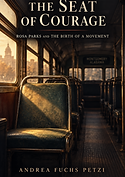
The Seat of Courage: Rosa Parks and the Birth of a Movement
Rosa Parks' refusal on a Montgomery bus becomes part of a longer story of organizing, sacrifice, and continued work for justice.
-
How does knowing Rosa's life before the bus ride change your understanding of that moment?
-
What forms of courage appear in the novel besides her refusal itself?
-
How do Raymond Parks and the wider community complicate the familiar story of one heroic individual?
-
What is lost when a complex person becomes a familiar public symbol?
-
How does the novel portray the costs of public action after the headlines fade?

A School for the World
A lecturer builds a language school from a single classroom, creating a meeting place for people from many cultures.
-
What makes a school a community rather than simply a business?
-
Which setback most tests the founder's sense of purpose?
-
How do students and teachers change one another across differences in language and culture?
-
What does the school make possible that its founder could not have planned?
-
How does the meaning of success change over the course of the book?

The Transformation of Martha Leland
A retired librarian enters a storytelling program that seems to mirror her life and offers the unsettling possibility of revising it.
-
Why is the program so compelling to Martha? What does she hope to change?
-
When does revising a memory become a way of avoiding it?
-
How does her relationship with Lily affect the choices she makes?
-
Is Martha gaining control of her story, or surrendering it? Which scene shaped your answer?
-
What does the ending suggest about identity and the people who remember us?

Gutenberg: The Work of Books
Johannes Gutenberg pursues an invention that will transform the making of books and the circulation of ideas, while testing his relationships and resources.
-
What drives Gutenberg most: curiosity, ambition, faith, or the wish to spread knowledge?
-
Whose labor and sacrifices make the invention possible?
-
How does the novel portray the tension between an inventor's vision and the practical demands of bringing it to life?
-
Does Gutenberg understand the consequences of what he is creating? Must an inventor understand them?
-
What parallels do you see between the printing press and a technological change in our own time?